
Safely Walking Your Dog During Coyote Mating Season
Every winter, usually between January and March, coyotes enter their mating and denning season. During this time, their behavior shifts in noticeable ways. They become more vocal, more territorial, and more visible, especially in areas where humans and wildlife overlap.
For dog owners, this season can feel unsettling—particularly if you walk your dog early in the morning, late at night, or live near open land, wooded areas, or river corridors. And for those of us who share life with Newfoundlands or other large, slow-moving dogs, it’s important to understand how coyote behavior changes this time of year and how that can affect our daily routines.
This isn’t about fear. It’s about awareness, preparation, and being realistic about the environment we’re walking through—even when that environment is our own neighborhood.

Why Coyote Mating Season Changes Everything
Coyotes are adaptable, intelligent animals. During most of the year, they tend to avoid people and move quietly through the landscape. Mating season is different.
This is when coyotes:
- Establish and defend territory
- Travel more frequently and more openly
- Vocalize to communicate with mates and rivals
- React defensively near den sites
What many people don’t realize is that mating season often pushes coyotes into areas they normally pass through quickly. Streets, sidewalks, parks, trails, and even residential neighborhoods become part of their patrol routes.
Most negative encounters between coyotes and dogs don’t happen because a coyote is “hunting” a dog. They happen because a dog unknowingly crosses into a space a coyote is actively defending.
When You Can Hear Them From Inside the House
This year, the coyotes haven’t been subtle.
There have been nights where they’re so loud I can hear them clearly from inside the house—howling, yipping, calling back and forth as they run up and down the street. This isn’t distant noise echoing from the countryside. It’s close. Residential. Right outside.
And Niya knows it.
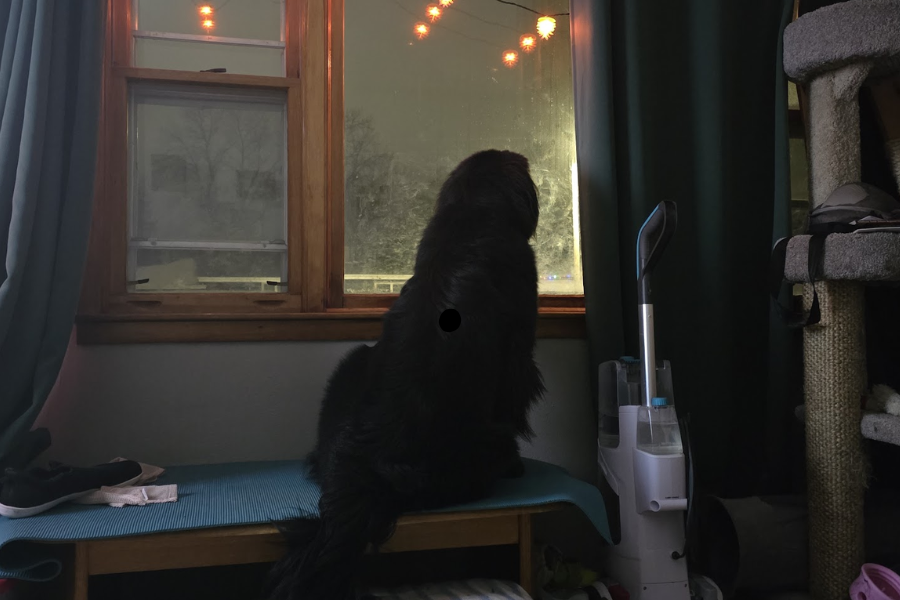
She’ll move to the window, body stiff, eyes locked, and let out what I call her danger bark—deep, serious, and completely different from her normal alerts. Niya isn’t a reactive dog. She doesn’t bark without reason. So when she does, I pay attention.
Watching coyotes move confidently through a residential street is a powerful reminder that coyote activity during mating season isn’t limited to rural or wilderness areas. These animals adapt quickly, using roads, sidewalks, and open yards as part of their territory.
If you’re hearing coyotes that close to your home:
- Take it as a sign to increase awareness
- Be more intentional about walk times
- Keep dogs leashed, even in familiar areas
- Avoid lingering outside at night
Our dogs often notice changes in the environment before we do. When a normally calm dog becomes alert with purpose, it’s worth listening.
Even Large Dogs Aren’t Exempt
There’s a persistent myth that coyotes only pose a risk to small dogs. While small dogs are certainly more vulnerable, large dogs are not immune, especially during mating season.
Coyotes may:
- Attempt to lure a dog away by retreating
- Work in pairs to intimidate or distract
- React defensively if a dog approaches too closely
Size alone does not equal safety.
Best Practices for Walking Your Dog During Coyote Season
Choose Walk Times Carefully
Coyotes are most active:
- At dawn
- At dusk
- Overnight
If your schedule allows, midday walks are the safest option during mating season. Even shifting your routine slightly earlier or later can reduce the chance of an encounter.
Keep Your Dog on a Short, Fixed Leash
This is not the season for:
- Retractable leashes
- Long leads
- Letting your dog wander ahead
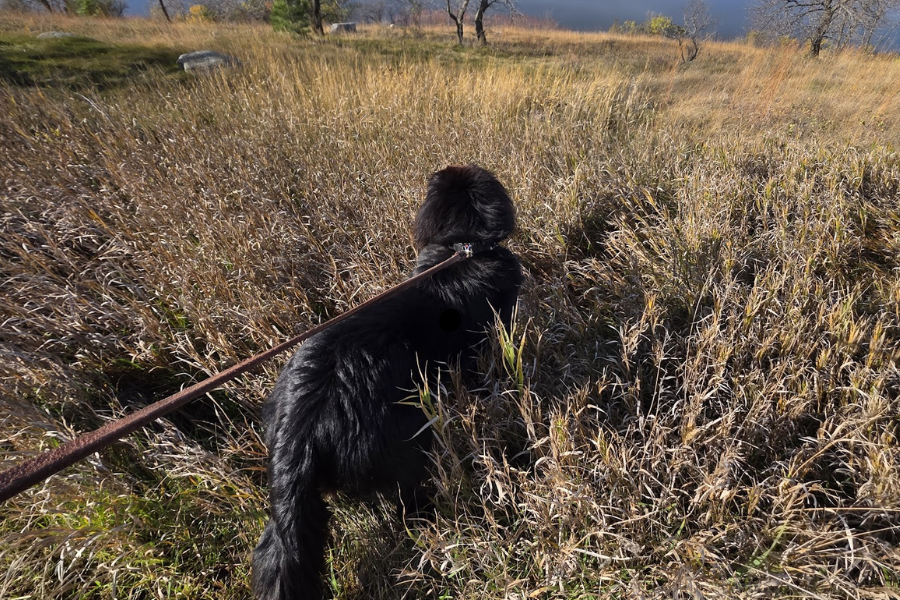
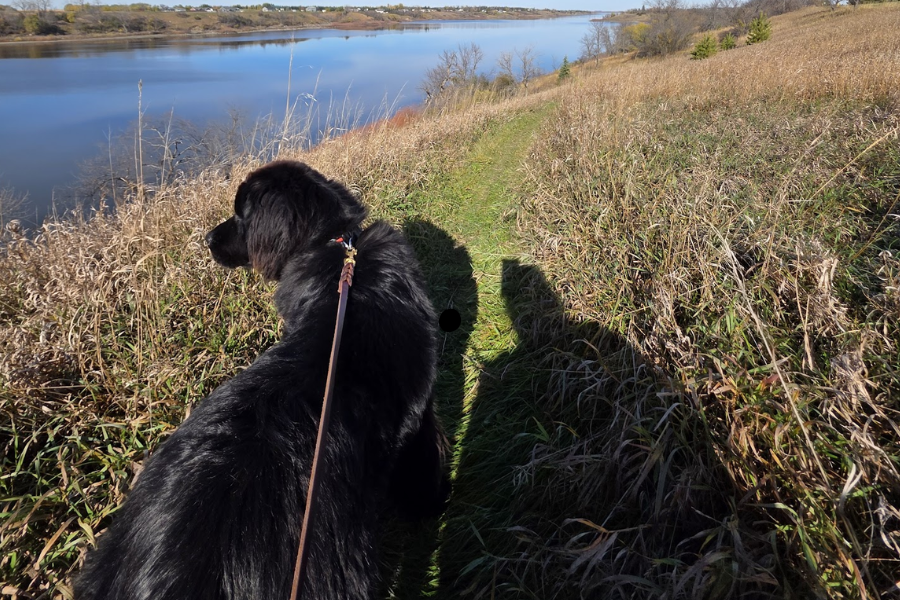
Keep your dog close to your side, especially near wooded edges, open fields, drainage areas, or riverbanks. Control and proximity matter.
Stay Alert in Familiar Places
One of the most dangerous assumptions we make is that familiar places are automatically safe.
Coyotes often move into:
- Neighborhood parks
- Walking paths
- Open yards
- Quiet residential streets
Watch for tracks in snow, increased vocalizations, or wildlife behavior that feels unusual. If something feels off, trust that instinct and change course.
Walk With Confidence and Carry Simple Deterrents
You don’t need extreme tools to stay safe. Often, awareness and presence are enough.
Helpful options include:
- A bright flashlight or headlamp
- A loud whistle or air horn
- Bear spray or pepper spray
- Your voice
The goal is to make yourself noticeable and confident—not to escalate or confront.
Never Allow Your Dog to Chase a Coyote
Coyotes may intentionally retreat to lure a dog farther away or toward another coyote.
If you see a coyote:
- Stop
- Keep your dog close
- Face the coyote
- Back away slowly
Do not run, and do not turn your back.
Skip the Headphones
This is one season where you want all your senses available. Hearing footsteps, rustling, or vocalizations can give you valuable early warning.
What to Do If You Encounter a Coyote
If a coyote approaches or follows you:
- Stay calm
- Keep your dog close
- Make yourself appear larger
- Use a firm, confident voice
- Maintain eye contact
- Slowly increase distance
Most coyotes will disengage once they feel you are aware, confident, and leaving their territory.
Balancing Caution With Normal Life
Coyote mating season doesn’t mean you need to stop walking your dog or live in constant fear. Coyotes are part of the ecosystem, and coexistence is possible with awareness and respect.
The key is recognizing that winter changes behavior, both for wildlife and for us. Adjusting routines for a few months is a small price to pay for safety.
Being cautious doesn’t make you paranoid.
Listening to your dog doesn’t make you dramatic.
Adjusting routines doesn’t mean giving up freedom.
It means being a responsible dog owner.
Especially when you live with a dog who trusts you completely to make good decisions on their behalf.


Join the Pack
Sign up for our quarterly Newf-Letter to stay up to date with your favorite pack of Newfoundlands